Cart is empty
0 Products
FREE DOMESTIC SHIPPING OVER $100. MADE BY NATURE. PERFECTED BY SCIENCE.
FREE DOMESTIC
SHIPPING OVER $100.


Cart
0 Product

Cart is empty
0 Products

Anxiety is one of the most commonly cited reasons consumers turn to cannabis products, yet much of the industry’s terpene and cannabinoid positioning still relies on tradition and word of mouth rather than controlled inhalation data. Even recent meta-analyses draw conclusions from a limited and heterogeneous pool of studies, underscoring how difficult it is to extract clear, decision-ready insights from inconsistent data.
In a previous research collaboration between Abstrax Tech and Western Washington University, vaporized terpene blends paired with CBD produced measurable behavioral shifts in a preclinical autism model. That study demonstrated that inhaled terpenes are not simply aromatic components, they’re biologically active contributors capable of influencing behavior under controlled conditions.
Building on that foundation, a new study asked two focused questions:
Can inhaled cannabis terpenes reduce anxiety-like behavior?
Does biological sex influence the outcome?
To answer those questions, researchers isolated two of the most prevalent cannabis monoterpenes, Linalool and β-Myrcene, and tested them alone and in combination with CBD using a passive vapor inhalation model designed to approximate real-world use.
For cannabis formulators developing inhalable products positioned around mood or relaxation, the implications are clear: terpene effects may depend on exposure pattern, compound pairing, and biological variability.
Table of Contents

This study matters because it shows that inhaled terpenes don’t necessarily behave the same across exposure patterns, sexes, or cannabinoid pairings.
Anxiety is one of the most common consumer-reported reasons for cannabis use. However, many product formulation decisions still rely on unverified assumptions like:
“Linalool is calming.”
“Myrcene is sedating.”
“More compounds create stronger effects.”
This research tested those assumptions under controlled inhalation conditions. Similar studies have primarily relied on oral or injection based routes, but a significant portion of consumers use inhalable products.
Additionally, including both sexes in this study allowed the team to detect any sex-specific effects on anxiety response, an area historically overlooked and underrepresented in preclinical cannabis research.
By performing research under approximate real-world conditions, R&D teams can shift from anecdotal evidence to controlled vapor data. When it comes to product development, that shift is significant.
Key Definitions
| Term | Definition |
|---|---|
| Cannabidiol (CBD) | A non-psychoactive cannabinoid derived from cannabis and hemp often associated with potential anxiolytic effects. |
| Elevated Plus Maze (EPM) | A test featuring a plus-shaped platform raised above the floor, with two open arms and two enclosed arms. Rodents typically prefer enclosed spaces, but reduced anxiety is indicated by increased time spent exploring the open arms. |
| Open Field Test (OFT) | Mice are placed in an open arena and allowed to explore freely. Anxiety-like behavior is inferred based on how much time the animal spends in the center of the arena versus staying close to the walls (a behavior known as thigmotaxis). |
| Passive Vapor Inhalation | A controlled exposure model where subjects inhale aerosolized compounds dispersed into an enclosed chamber without forced administration. |
| Locomotor Activity | Physical movement of an organism from one location to another, serving as an indicator of behavioral, neurological, and physiological health. |
| Entourage Effect | The theory that cannabinoids, terpenes, and other cannabis compounds work synergistically to influence the body’s endocannabinoid system. |
| Anxiolytic (Preclinical Context) | Reduction in anxiety-like behavior as measured in standardized behavioral assays. |
Researchers tested vaporized Linalool, β-Myrcene, CBD, and terpene-CBD combinations in male and female mice under both acute and repeated exposure conditions. More specifically:
All compounds were delivered through passive vapor inhalation to better mimic real-world inhalable use. The two exposure patterns evaluated included:
Anxiety behavior was assessed using standard behavioral models (Elevated Plus Maze and Open Field Test). Additionally, locomotor activity was measured to help distinguish reduced anxiety from simple sedation.
The key variable? Biological sex, which is often overlooked in preclinical cannabis research.


The study revealed clear patterns in how vaporized Linalool, β‑Myrcene, and CBD affected anxiety-like behavior, as well as notable differences between male and female mice. The most significant findings included:
Together, these findings indicate that both biological sex and the type of exposure matter when considering the anxiolytic potential of cannabis terpenes, CBD, and combinations thereof. Now, let’s get into it.

For the statistical tools and methods used to make sense of this complex behavioral data, be sure to read the full white paper Moody Mice & Monoterpenes: A Case Study on Sex Differences in the Anxiolytic Properties of Common Cannabis Terpenes.
Yes, repeated vapor exposure to both Linalool and β-Myrcene reduced anxiety-like behavior in female mice. Under repeated exposure conditions:
Interestingly, male mice did not show the same repeated-exposure response. This suggests that sustained inhalation patterns may influence terpene responsiveness differently depending on biological sex.
For product developers, this introduces formulation variables that are rarely discussed. First, exposure patterns may matter just as much as compound selection. Second, exposure methods may have different outcomes between biological sexes.
Yes, acute exposure produced anxiety-like reductions primarily in male mice. After a single brief vapor exposure:
The acute exposure protocol was tested in male mice only, as the repeated exposure paradigm had already demonstrated anxiolytic effects in females. This divergence suggests that immediate-onset effects and cumulative effects may not follow the same response curve, and that sex-based neurobiology may influence those differences.
Linalool enhanced CBD’s anxiolytic effects under repeated exposure conditions in females, while β-Myrcene did not show the same synergy.
These findings support a selective model of the entourage effect, where synergy depends on the specific terpene, the pairing, and biological context.
No, locomotor data suggest the behavioral effects were not explained by simple sedation. If reduced anxiety was the result of suppressed movement, we would expect uniform decreases in locomotion. Instead:
These divergent movement effects indicate more specific neurobehavioral interactions rather than a general sedative response.

This study suggests that the entourage effect is compound-specific and context-dependent rather than universal.
Only one terpene (Linalool) enhanced CBD under the tested conditions, and that enhancement only occurred in females under repeated exposure. Importantly, β-Myrcene did not enhance CBD under the tested conditions.
This challenges the assumption that all terpene-cannabinoid pairings naturally produce additive or synergistic outcomes. For formulators, it reinforces the value of validating specific pairings rather than relying on broad terpene assumptions.
This animal-based study observed clear sex-based differences in response to inhaled terpenes and terpene-CBD combinations, which begs the question, “do those same sex-dependent differences occur in humans under similar conditions?”
Maybe, but we need more data to make any kind of definitive conclusion. However, we do know that, biologically, sex hormones are known to influence:³
It’s also important to note that CBD interacts with serotonin 5-HT1A receptors and other targets associated with mood regulation. Linalool has been linked to GABAergic pathways, and their observed synergy could reflect complementary activity across these systems, potentially modulated by hormonal or receptor-level differences; though the precise mechanisms remain an area for future study.
If sex hormones can influence receptor availability and neurotransmission, then the preclinical findings in this study further support the importance of sex-specific formulation strategies.
The primary implication is that formulations should be intentionally designed with validated compound interactions under real-world conditions rather than assumptions based on strain labels or single “hero” compounds.
Terpene behavior depends on exposure pattern, compound pairing, and biological context. For inhalable product development, this research suggests:
For example, since females showed stronger responses under repeated exposure and to certain combinations, product developers could explore lower-dose terpene blends for women or pulsed dosing approaches for men. This aligns with broader trends in precision wellness and consumer interest in personalized cannabis effects.
It’s important to acknowledge that this study was conducted in a preclinical mouse model and it only evaluated two terpenes under short-term exposure conditions.
While the passive vapor inhalation method helped mimic real-world use, the study didn’t test dose escalation or chronic exposure. Additionally, human anxiety is incredibly complex with biological, psychological, and environmental dimensions at play. While the behavioral tests performed in this study were standard, they can’t capture the full complexity of human anxiety.
It's also worth noting that terpenes have distinct aromas, and some of the exploratory behavior observed, particularly increased open-arm time, could partially reflect olfactory novelty rather than purely anxiolytic pharmacology. The researchers acknowledged this as an area for future study.
For these reasons, the findings in this study should be viewed as directional scientific insights rather than direct clinical conclusions.
This study supports a shift toward measurable terpene-cannabinoid interaction data rather than strain-based assumptions. Across both this and the prior collaboration, the consistent message is:
Ideally, future studies will focus on defining which terpene/cannabinoid combinations produce consistent effects, under which exposure patterns, and in which populations.
Even without future research, the results in this study support precise, evidence-based formulations. They encourage researchers and product developers alike to look beyond terms like “indica” and “sativa” or strain names, focusing instead on measurable chemistry and validated outcomes in cannabis products.
By continuing to investigate how these compounds interact, and for whom they work best, evidence-led blend design may become a key differentiator for brands developing intentional cannabis and CBD products.

At Abstrax Tech, we conduct peer-reviewed research to better understand how cannabis chemistry translates into measurable outcomes. Our collaborations with academic institutions help move the industry beyond anecdote and toward validated formulation strategies.
If you're developing inhalable cannabis or CBD products and want to ground your formulations in data, our team is here to support you with evidence-led blend design.
Abstrax Tech. (n.d.). Moody Mice & Monoterpenes: A Case Study on Sex Differences in the Anxiolytic Properties of Common Cannabis Terpenes. Abstrax Tech. Retrieved March 13, 2026 from https://abstraxtech.com/pages/terpene-research
de Almeida, D. L., & Devi, L. A. (2020). Diversity of molecular targets and signaling pathways for CBD. Pharmacology research & perspectives, 8(6), e00682. https://doi.org/10.1002/prp2.682
Han, K., Wang, J. Y., Wang, P. Y., & Peng, Y. C. (2024). Therapeutic potential of cannabidiol (CBD) in anxiety disorders: A systematic review and meta-analysis. Psychiatry research, 339, 116049. https://doi.org/10.1016/j.psychres.2024.116049
Hodes, G. E., Bangasser, D., Sotiropoulos, I., Kokras, N., & Dalla, C. (2024). Sex Differences in Stress Response: Classical Mechanisms and Beyond. Current neuropharmacology, 22(3), 475–494. https://doi.org/10.2174/1570159X22666231005090134
Landucci, E., Pellegrini-Giampietro, D. E., Gianoncelli, A., & Ribaudo, G. (2022). Cannabidiol preferentially binds TRPV2: a novel mechanism of action. Neural regeneration research, 17(12), 2693–2694. https://doi.org/10.4103/1673-5374.335821
Wagner, J. K., Gambell, E., Gibbons, T., Martin, T. J., & Kaplan, J. S. (2024). Sex Differences in the Anxiolytic Properties of Common Cannabis Terpenes, Linalool and β-Myrcene, in Mice. NeuroSci, 5(4), 635–649. https://doi.org/10.3390/neurosci5040045
Whyte, L. S., Ryberg, E., Sims, N. A., Ridge, S. A., Mackie, K., Greasley, P. J., Ross, R. A., & Rogers, M. J. (2009). The putative cannabinoid receptor GPR55 affects osteoclast function in vitro and bone mass in vivo. Proceedings of the National Academy of Sciences of the United States of America, 106(38), 16511–16516. https://doi.org/10.1073/pnas.0902743106
Wilson J, Dobson O, Langcake A et al. (2026). The efficacy and safety of cannabinoids for the treatment of mental disorders and substance use disorders: a systematic review and meta-analysis. The Lancet Psychiatry, 2026; 13, 304-315. https://doi.org/10.1016/S2215-0366(26)00015-5
Yang, X., Fang, Y., Chen, H., Zhang, T., Yin, X., Man, J., Yang, L., & Lu, M. (2021). Global, regional and national burden of anxiety disorders from 1990 to 2019: results from the Global Burden of Disease Study 2019. Epidemiology and psychiatric sciences, 30, e36. https://doi.org/10.1017/S2045796021000275
Linalool is a very popular terpene found all around the world. Linalool is floral and slightly sweet with just a hint of mint, very reminiscent of lavender.
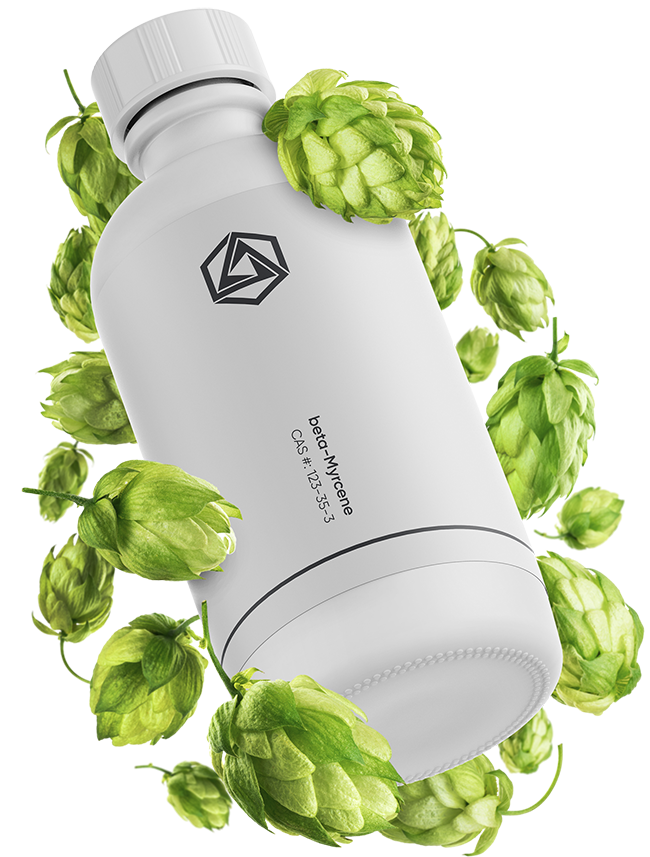
beta-Myrcene is a prevalent terpene in hops, mango, bay leaves, lemongrass, and eucalyptus. The flavor is a strong sweetness with minty balsam and a vegetal leafy feel.


The Kush Cake Strain’s Cookies Lineage and Dessert-Forward Gas Profile Make it a Formulator’s Secret Weapon Last updated: September 19,...


How cannabis vape manufacturers can use “newstalgia” to stand out on crowded dispensary shelves. Nostalgia sells, and the brands paying...

Driven by Fuel-Forward Cannasulfurs and Sweet Esters, Candy Gas Cannabis Strains Produce Some of the Best-Selling Aroma Profiles in the...

What the Cannabis Industry Gets Wrong About Terpenes, and Why It Matters for Your Products Terpenes are one of the...

New peer-reviewed research from Abstrax confirms which specific compounds are behind the "fats and waxes" fraction in BHO and exactly...

What Strawnana’s 100% Exotic Factor and Cannabis Cup Record Mean for your Dessert Weed Lineup Strawnana, also known as Strawberry...

A guide to filling equipment, vape formulation compatibility, and production consistency at scale. Author: The VapeJet Editorial Team Reviewed by:...

Discover 10 Candy Gas Strains Analyzed by Abstrax, from Bacio Gelato and Runtz OG to Unicorn Poop and Beyond Candy...

How cannabis brands can use niche holidays to build deeper consumer relationships and drive year-round loyalty. Cannabis consumers are more...