Cart is empty
0 Products
FREE DOMESTIC SHIPPING OVER $100. MADE BY NATURE. PERFECTED BY SCIENCE.
FREE DOMESTIC
SHIPPING OVER $100.


Cart
0 Product

Cart is empty
0 Products

Terpenes are one of the most discussed and least understood topics in cannabis. Many of the most common misconceptions originated in marketing language, outdated classification systems, and testing methods that don't capture the compounds most responsible for how cannabis actually smells and tastes.
For consumers, the result can be conversations with budtenders using outdated terminology, leaving with the wrong product, and not finding their desired experience. For formulators, it's weak product briefs, mismatched formulations, product lineups that don't deliver on promises, and potential for compliance risks. Brands may risk putting out one-dimensional products that erode customer loyalty and ultimately leave their reputation sullied by “mids.”
Abstrax's peer-reviewed research and advanced analytical methodology puts us in a unique position to address these myths directly. Explore ten of the most persistent terpene misconceptions, learn the science behind them, and discover what that means for your benchtop formulations.
No. Terpenes are not psychoactive compounds. THC and other cannabinoids bind to endocannabinoid receptors to produce psychotropic effects, but terpenes don't share those pharmacological properties. While research into terpene bioactivity is ongoing, there's no established evidence that terpenes are intoxicating on their own.
What terpenes do is shape how cannabis products smell and taste, and that turns out to matter more than most people think. Scent is the only sense that bypasses the thalamus and routes directly to the brain's emotional and memory centers, which is why an aroma can trigger a strong feeling or vivid memory before conscious thought catches up.¹ Every other sense – sight, sound, touch – takes a longer route through the thalamic relay before reaching those centers. Smell skips the line entirely.
For formulators, that sensorial shortcut has real product implications. A consumer who opens a package and gets hit with exactly the right aroma has already started forming an impression before they've taken a single hit. The flavor and aroma profile a terpene blend creates isn't a finishing detail on a cannabis product. It's one of the most direct routes to whether that consumer loves what they bought and comes back for more.
THC percentage is not a reliable indicator of cannabis quality, but that doesn't mean it's irrelevant.
THC concentration influences the intensity of psychoactive effects, but the relationship is far less predictable than labels suggest. Bioavailability, individual tolerance, consumption method, and product formulation all influence how THC is experienced, meaning two products with identical THC percentages can produce meaningfully different experiences.
The quality argument breaks down even more when aroma and sensory experience enter the picture. Research by Plumb et al. (2022) found that aroma, not THC, predicted the subjective experiences of smoked and vaporized cannabis flower.² However, THC isn't the only label metric that falls short.
Abstrax's published research found that across 31 cannabis extract samples, terpene concentration (the secondary quality signal most commonly featured on product labels after THC) showed virtually no correlation with perceived aroma quality. The compounds that actually differentiated high-quality profiles were minor nonterpenoid flavorants present in trace concentrations.³
For product developers, optimizing for THC percentage alone doesn’t address the variables that most influence how a product smells and tastes. A profile that accounts for terpenes, flavorants, and the interactions between them is a stronger predictor of consumer satisfaction than potency alone.
No. The idea that Myrcene content determines whether a cannabis strain is indica or sativa is not supported by data.
The specific claim is that strains with more than 0.5% myrcene by weight are indica and more sedating, while those below that threshold are sativa and more stimulating. However, the theory falls apart against real-world examples. Cambodian Haze, Durban Poison, and Super Sour Diesel are all myrcene-dominant cultivars that aren’t associated with the sedating effects the myth would predict.
The deeper problem is that the indica-sativa binary itself is an unreliable framework for predicting effects or aroma. A 2022 analysis of commercial U.S. cannabis found that chemically distinct terpene clusters (one dominated by beta-Caryophyllene and d-limonene, another by myrcene and alpha-pinene, and a third by terpinolene and myrcene) showed no meaningful correspondence with indica, sativa, or hybrid labels.⁴
For formulators, marketing a product on indica or sativa terpene assumptions means making a claim that may not be supported by chemistry.


No, terpenes contribute to the characteristic aroma of cannabis, but they don't account for the most distinctive and differentiating scents that consumers often respond to.
The clearest evidence of this comes from the Gelato family, specifically the four phenotypes produced from Mario Guzman’s original cross. Acai Berry Gelato, Gello Gelato, Mochi Gelato, and Bacio Gelato have nearly identical terpene profiles, but the strains smell and taste distinct from one another. If terpenes were the primary driver of cannabis aroma, that wouldn’t be possible.
Additionally, when it comes to isolated compounds like terpenes, our tastebuds don’t recognize their flavor in the traditional sense. It’s the combined sensory experience of taste and smell (aka retronasal olfaction or backward smelling) that creates the flavor most often associated with terpenes. Even then, the unique aroma profiles of exotic cannabis are driven by a combination of volatile compounds including flavorants.
Flavorants, the primary drivers of exotic cannabis aroma, are a class of minor nonterpenoid compounds including esters, cannasulfur compounds, heterocycles, and other low-concentration aromatics that standard cannabis testing rarely captures.
For formulators, a terpene profile alone does not contain enough chemical information to fully replicate a cultivar's aroma. For consumers, this means the "terpene profile" on a label describes only part of what they're smelling.
D-Limonene contributes a background citrus quality to cannabis aroma and is used frequently throughout the flavor world to lay the foundation for citrus flavors in food and beverage products. However, it is not the primary driver of the pungent tropical and citrus profiles consumers associate with cultivars like Tangie or 24K Gold.
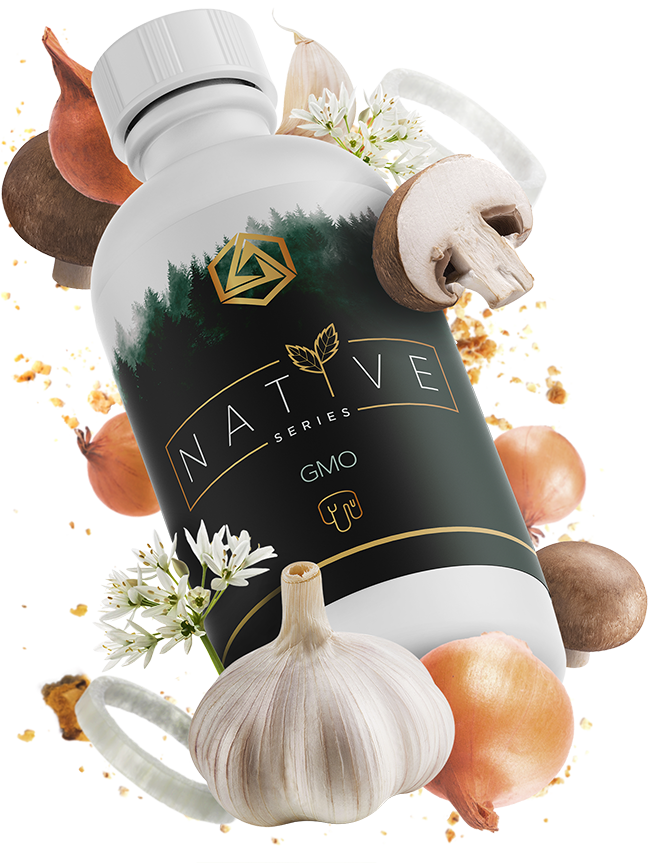
GMO, a cultivar dominant in d-Limonene, is known for its savory, funky, and intensely gassy character with no meaningful citrus or tropical notes. If limonene were responsible for tropical cannabis aromas, GMO wouldn’t smell the way it does.
The true drivers of exotic tropical citrus in cannabis are flavorants called tropicannasulfur compounds (TCSCs). Abstrax has identified four TCSCs in cannabis to date:
Each carries a distinct tropical signature. 3MH is associated with guava, 3MHA with blackberry and passionfruit, 3MHB with citrus and grapefruit, and 3MHH with an intense pungent tropical citrus character. Despite being present at parts-per-billion concentrations, their aromatic impact far outweighs that of terpenes present in much greater quantities.
TCSCs are not detectable by standard GC-MS terpene analysis. Replicating the tropical citrus character of Tangie Gas cultivars requires TCSC data and a supplier with the analytical capability to detect, dose, and incorporate them accurately.
Not necessarily, and in many cases the opposite is true. When terpene concentration exceeds the appropriate threshold for a given product format, it can result in a product that smells perfumey, harsh, or artificial, and it can influence viscosity leading to cart leaks. Consumers experience this as off-putting rather than premium, which can make high terpene percentage a liability rather than a selling point when it isn't carefully managed.
For formulators, terpene concentration is a variable to dial in, not a quality metric to maximize. There is no single terpene percentage that works consistently across product formats. A concentration that works in a distillate-based vape will perform differently complementing a CO₂ oil, and what tastes balanced in an inhalable may come across as bitter or overpowering in an edible.
Experienced formulators approach terpene concentration incrementally, validating sensory and function at each stage rather than targeting a fixed number. Small adjustments between test batches, evaluated against the desired aroma profile, produce more reliable and desirable results than chasing a higher percentage on a label.
No. Beta-Caryophyllene is a terpene, and its chemical structure is fundamentally different from cannabinoids like THC or CBD. The confusion stems from the term "dietary cannabinoid," which appears in scientific literature to describe naturally occurring compounds found in foods like black pepper and cloves that interact with biological pathways also associated with cannabinoids.
While the term reflects the functional observation that beta-Caryophyllene interacts with CB2 receptors, it doesn't reflect beta-Caryophyllene's chemical classification. The distinction matters for anyone formulating or labeling cannabis products.
Regardless of how beta-Caryophyllene may be characterized in research contexts, it should be treated, formulated, and labeled as a terpene-based flavor and aroma compound and not as a cannabinoid or otherwise therapeutic ingredient.

No, though the confusion is understandable. Humulene was historically referred to as alpha-Caryophyllene, a naming convention that positioned it as a direct relative of beta-Caryophyllene and created an association that persists in cannabis and terpene discussions today. Modern chemical literature no longer uses the term alpha-Caryophyllene, and Humulene is now recognized as a distinct compound in its own right.
Humulene and beta-Caryophyllene are structural isomers, meaning they share the same molecular formula (C₁₅H₂₄) but differ in how their atoms are arranged. That structural difference produces meaningfully different sensory profiles.
Beta-Caryophyllene presents as warm, peppery, and woody, and it's one of the most abundant sesquiterpenes in cannabis.
Humulene has an aroma that’s drier, more herbal, and earthy, often appearing at lower concentrations as a supporting rather than dominant terpene.
For formulators, treating these compounds as interchangeable ignores real differences in aroma character and will produce unpredictable sensory results.

No, and the association between Terpinolene and any energizing effects has less to do with its chemistry than with how Terpinolene-dominant strains have historically been classified.
Terpinolene is most common in strains that carry a sativa label, like Jack Herer. The energizing reputation followed from that classification rather than from any demonstrated property of the compound itself. In reality, there is no causal human clinical evidence that Terpinolene produces energizing effects.
Studies exploring the potential mood effects of individual terpenes have largely been conducted on animals or involved very small human sample sizes. Neither is a strong enough evidence base to support physiological claims about any terpene.
Terpinolene's documented contribution is to aroma. At lower concentrations it adds bright, pine-forward citrus character. In more complex profiles it often supports and brightens the overall aromatic blend without dominating it. For formulators, its value lies in what it contributes to a profile's sensory character, not in any mood or experience association its reputation has inherited from outdated strain classifications.

Not necessarily. The terpene molecule itself is chemically identical regardless of whether it comes from a cannabis plant or a lemon peel, so d-Limonene extracted from lemons is the same as d-Limonene extracted from cannabis. Essentially, a terpene is a terpene.
Cannabis-derived terpenes (CDTs) and botanically-derived terpenes (BDTs) contain the same molecules. The distinction is in what surrounds them, the consistency of their supply, and whether they can legally cross state lines.
Where CDTs can offer a genuine advantage is in strain authenticity. Cannabis profiles may carry cannabis-native compounds that are difficult to replicate from botanical sources alone. For premium vapes, live resin products, and strain-specific SKUs where true-to-type aroma is the core brand promise, CDTs can deliver a layer of complexity that a terpene-only BDT blend typically won't.
Where BDTs have a clear advantage is everywhere else. Botanical terpenes offer tighter lot-to-lot consistency, broader supply, more predictable pricing, and better stability across formats like beverages and edibles. Cannabis-derived terpenes are also generally limited to intrastate commerce, which makes them impractical for national product launches. For formulators building at scale or across multiple markets, BDTs are typically the stronger operational choice.
A more useful question is whether the terpene source matches the product's brand promise, format, and market footprint. A well-built botanical profile with targeted flavorant support can replicate true-to-type cannabis aroma. A CDT that's poorly extracted or inconsistently handled won't outperform it. Methodology and documentation matter more than origin.
At Abstrax Tech, we conduct peer-reviewed research to understand how cannabis chemistry actually works. Our team uses GCxGC-TOF-MS/FID/SCD analysis, structured sensory panels, and proprietary analytics to translate complex volatile chemistry into consistent, compliant product experiences.
Whether you're building strain-authentic vape profiles, scaling edibles across markets, or navigating the limits of what a standard terpene panel can tell you, we can help you formulate with confidence.
Contact Abstrax Tech today for formulation inquiries.
Kadohisa, M. (2013). Effects of odor on emotion, with implications for behavior. Frontiers in Systems Neuroscience, 7, Article 66. https://doi.org/10.3389/fnsys.2013.00066
Plumb, J.; Demirel, S.; Sackett, J. L.; Russo, E. B.; Wilson-Poe, A. R. The Nose Knows: Aroma, but Not THC Mediates the Subjective Effects of Smoked and Vaporized Cannabis Flower. Psychoactives 2022, 1(2), 70–86. https://doi.org/10.3390/psychoactives1020008
Oswald, I. W. H., Paryani, T. R., Sosa, M. E., Ojeda, M. A., Altenbernd, M. R., Grandy, J. J., & Martin, T. J. (2023). Minor, nonterpenoid volatile compounds drive the aroma differences of exotic Cannabis sativa L. ACS Omega, 8(41), 37316–37328. https://doi.org/10.1021/acsomega.3c04496
Smith, C. J., Vergara, D., Keegan, B., & Jikomes, N. (2022). The phytochemical diversity of commercial cannabis in the United States. PLOS ONE, 17(5), e0267498. https://doi.org/10.1371/journal.pone.0267498
Paryani, T. R., Sosa, M. E., Page, M. F. Z., Martin, T. J., Hearvy, M. V., Ojeda, M. A., Koby, K. A., Grandy, J. J., Melshenker, B. G., Skelly, I., & Oswald, I. W. H. (2024). Nonterpenoid chemical diversity of Cannabis phenotypes predicts differentiated aroma characteristics. ACS Omega, 9(26), 28806–28815. https://doi.org/10.1021/acsomega.4c03225
Also known as Humulene, this terpene isolate literally gets its name from hop plant formal name: homulus lulupus. As such, it makes sense that this terpene would be a primary constituent of the iconic smell of beer. Also commonly known as alpha-Caryohpyllene. Humulene has a potent earthy flavor with a bitter woody overtone.
As its name suggests, d-Limonene has a loud citrus flavor and smell. It is found in oranges, limes, lemons, grapefruits, and many other citrus fruits.
This abundant terpene occurs in the tea tree, lilac, cumin, nutmeg, and apples. Terpinolene has woody overtones with a hint of citric sweetness. Usually the most prominent terpene in Hazes.
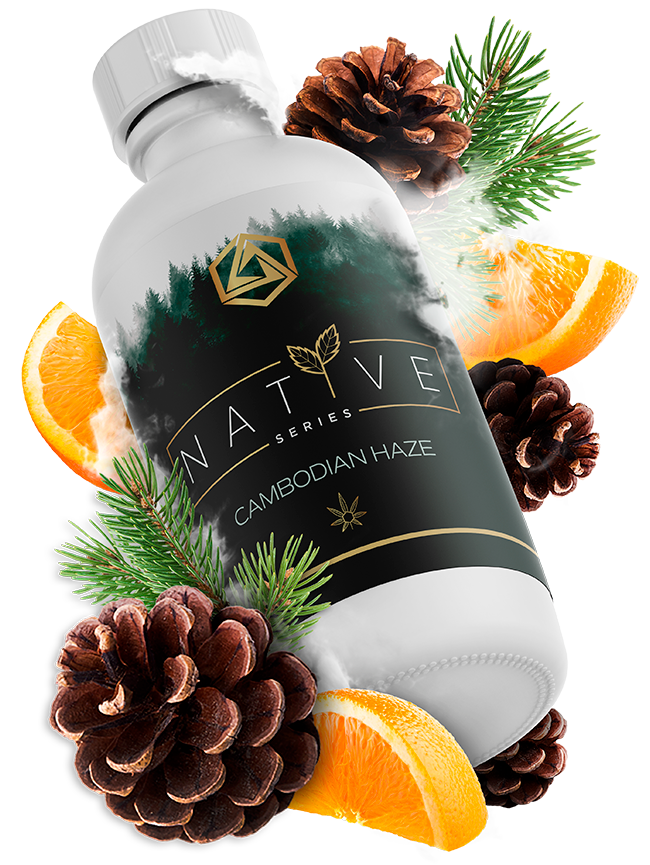
Skip backpacking across Southeast Asia and find yourself with the rich euphoria of Cambodian Haze. Loud citrus and pine harmonize with herbal spice and sweet berries for an energetic frequency that’ll help you transcend reality.
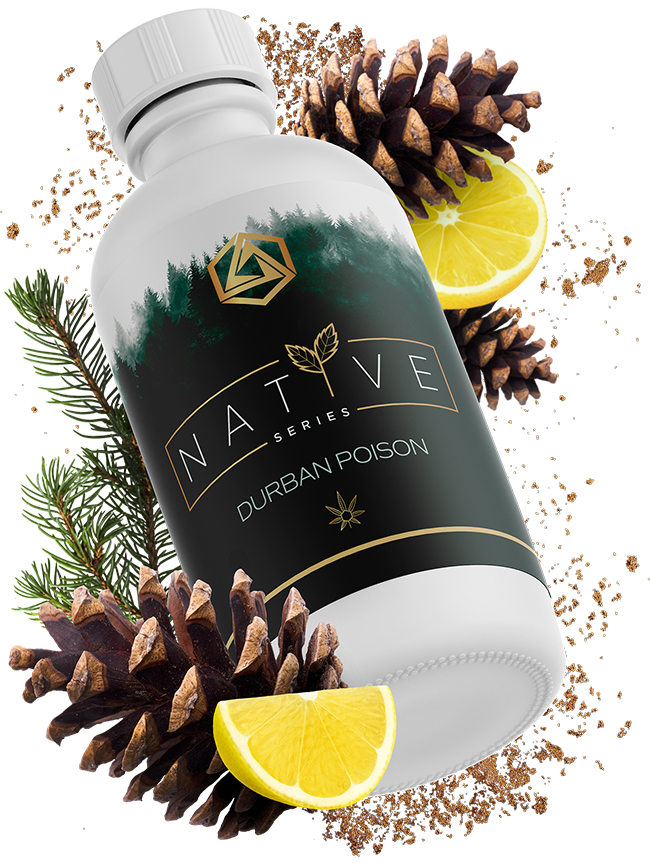
The name may sound ominous, but Durban Poison is the dank wake-n-bake option you’ve been waiting for. The sweet pine and citrus provides a jolt of cerebral stimulation that heightens the senses and sharpens focus.
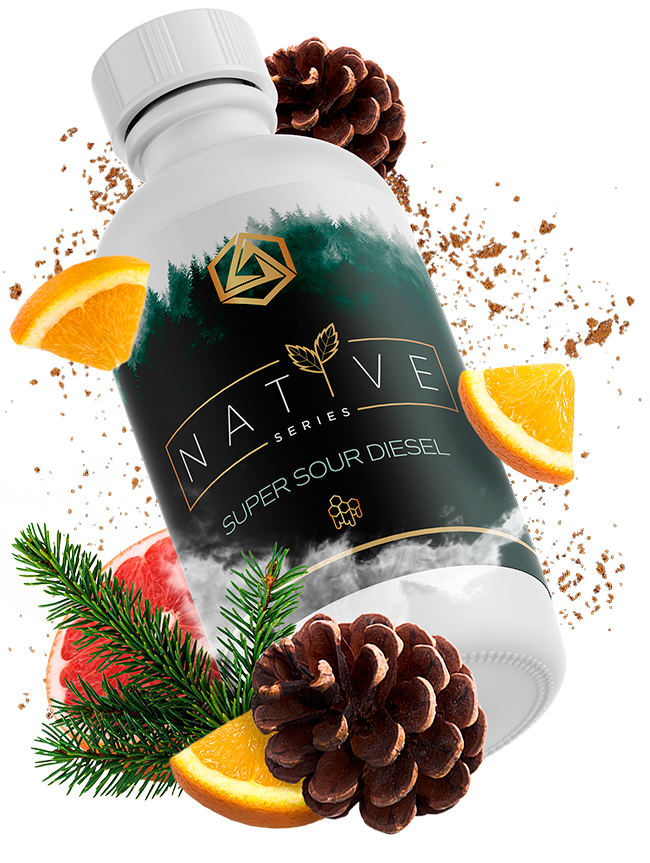
As a cross between Super Silver Haze and Sour Diesel, it should come as no surprise that Super Sour Diesel is fuel-forward with pungent notes of pine, earth, and citrus. Prepare for a sauce that’s unforgettably potent.
A child of Tangie and Kosher Kush, 24K Gold introduced the world to "Tangie Gas". Bred by DNA Genetics, one of the most awarded and influential names in cannabis history, this profile honors the legacy of California flavor that changed cannabis forever.
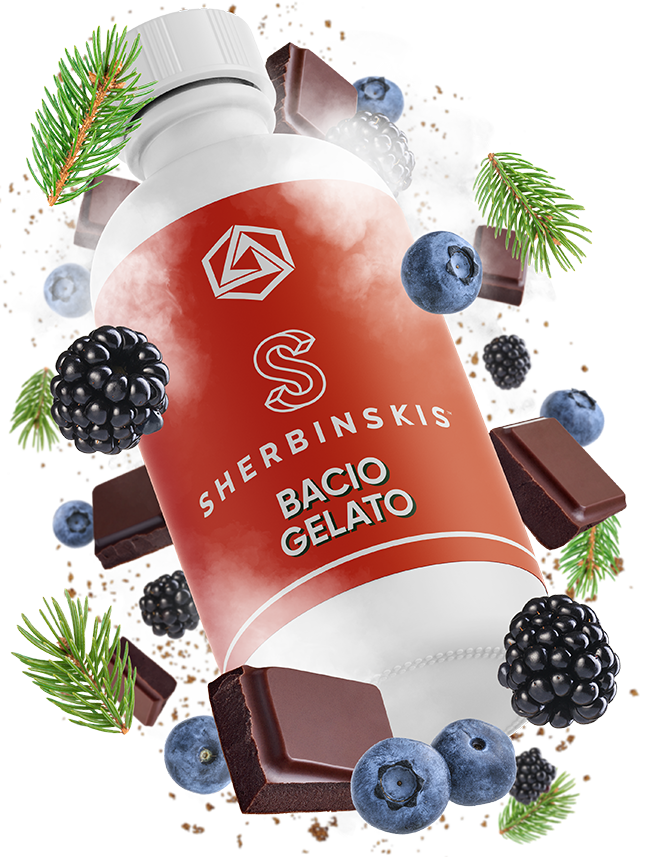
Out of the tens of thousands of cultivars we’ve analyzed, Bacio Gelato reigns supreme as the gassiest strain ever measured. Created in partnership with Mario Guzman of Sherbinskis, this is the world’s only authentic and official Gelato terpene profile.
As the first to benefit from our breakthrough discovery, GMO is kicking off the next era of botanical aromatics. Flavorants Skatole and Indole multiply its notoriously savory and funky notes for a loud, gassy, and undeniably pungent finish.
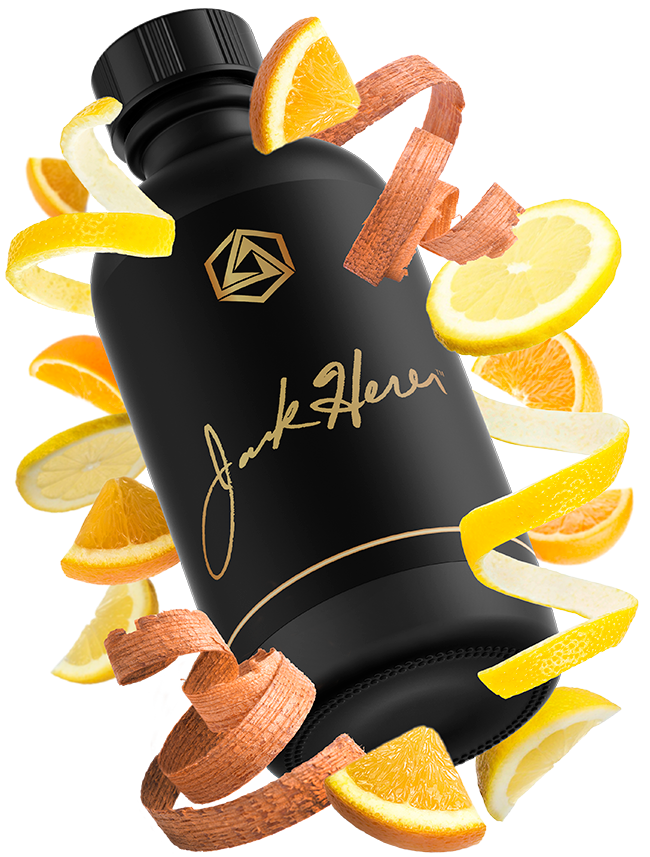
Born from thousands of hours of research and development, the Signature Series represents a brand new age of authenticity in cannabis. Made in full collaboration with the Herer family themselves - this is the definitive Jack Herer.


The Kush Cake Strain’s Cookies Lineage and Dessert-Forward Gas Profile Make it a Formulator’s Secret Weapon Last updated: September 19,...


How cannabis vape manufacturers can use “newstalgia” to stand out on crowded dispensary shelves. Nostalgia sells, and the brands paying...

Driven by Fuel-Forward Cannasulfurs and Sweet Esters, Candy Gas Cannabis Strains Produce Some of the Best-Selling Aroma Profiles in the...

New peer-reviewed research from Abstrax confirms which specific compounds are behind the "fats and waxes" fraction in BHO and exactly...

What Strawnana’s 100% Exotic Factor and Cannabis Cup Record Mean for your Dessert Weed Lineup Strawnana, also known as Strawberry...

A guide to filling equipment, vape formulation compatibility, and production consistency at scale. Author: The VapeJet Editorial Team Reviewed by:...

Discover 10 Candy Gas Strains Analyzed by Abstrax, from Bacio Gelato and Runtz OG to Unicorn Poop and Beyond Candy...

New Research on Linalool, b-Myrcene, and CBD Reveals Sex-Specific Responses in an Inhalation Study Anxiety is one of the most...

How cannabis brands can use niche holidays to build deeper consumer relationships and drive year-round loyalty. Cannabis consumers are more...